
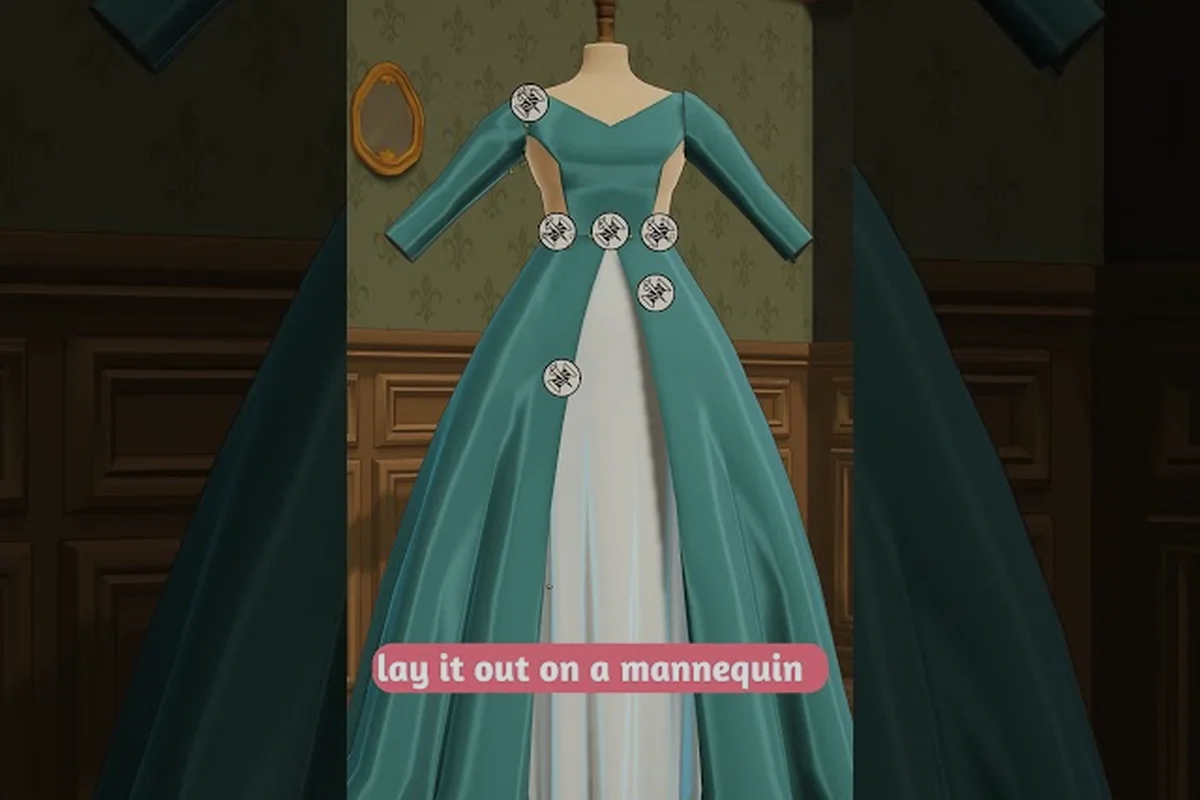
Decorating a gown is the step that turns a sewn-together set of fabric panels into something a customer will actually remember, and the Dressmaker decorations system is designed around that exact moment. According to the official Steam store page, the making loop ends with applying buttons, bows, appliqué, and lace trims to a dress before it ships out the door. This guide walks through every decoration category in the game, explains what each one contributes to a finished piece, and shows how to plan a decoration pass that matches the commission brief without blowing your material budget.
Decoration Categories and Where They Appear on the Gown
The decorations menu in Dressmaker is split into four functional groups: buttons, bows, appliqué pieces, and lace trims. Each group operates on a different part of the dress, which means a single gown can carry a cluster of small buttons down the bodice, a statement bow at the waist, an appliqué motif on the chest, and a strip of lace along the hem — all without the pieces visually fighting each other if you plan the palette first.
According to the official Dressmaker store description, decoration is a deliberate step that follows cutting and sewing, so a player who rushes past the sketchbook will feel the consequences when a single lace trim clashes against a velvet base. Community testers have noted that the game treats each decoration as a layered sprite rather than a recolored panel, which is why positioning matters as much as color.
| Decoration Group | Typical Placement Zones | Visual Weight | Skill Consideration |
|---|---|---|---|
| Buttons | Bodice front, cuffs, waistband | Small, clustered | High count = expensive |
| Bows | Waist, neckline, shoulder | Medium to large | One focal bow reads best |
| Appliqué | Chest, back, skirt panel | Medium, motif-based | Shape and color must echo base fabric |
| Lace Trims | Hem, neckline, sleeve edge | Light, edging | Frame the silhouette, do not crowd it |
How Decoration Slots Work
Each dress pattern reserves a fixed number of decoration slots per zone, and slots cannot be added by paying more money — they are baked into the pattern at the sketchbook stage. Players who want a heavily embellished gown need to pick a pattern with enough chest, waist, and hem slots before they ever touch the sewing machine. If a commission asks for "lots of detail," swapping to a fuller pattern with three chest slots and two waist slots is usually cheaper than cramming decorations into a minimal silhouette and watching the layout clip.
Color Coordination With the Base Fabric
Five fabrics appear in the official copy: cotton, linen, wool, silk, and velvet, and each takes dye differently. Velvet absorbs color deeply and tends to swallow pale lace, while linen and cotton keep pastel decorations legible. A safe rule from community testing is to keep decoration color within two shades of the dyed base, or go deliberately contrasting for a single accent piece — never both at once, or the eye has nowhere to rest.
Buttons Decoration: Small Pieces, Big Impact
Buttons are the most granular decoration in the game, and the easiest to mis-budget. Each button is individually rendered on the bodice, cuff, or waistband, which means a single dress can require anywhere from two to fourteen button placements depending on the pattern. Players who want to learn more about placement logic can cross-reference the layering rules breakdown once they have read this section.
| Button Style | Best Paired With | Reads Well On | Common Mistake |
|---|---|---|---|
| Round stud | Cotton, linen bodice | Pastel dyed bases | Over-clusters on a small chest panel |
| Shank button | Velvet, wool | Deep saturated colors | Pairs poorly with sheer lace overlay |
| Toggled button | Wool, heavy linen | Earth-tone palettes | Looks lost on silk |
| Decorative coin | Silk, velvet | Formal commissions | Clashes with busy appliqué motifs |
Button Count and Commission Payouts
Community reports suggest that customers requesting "simple" or "everyday" gowns reward two to four buttons per dress, while formal commissions quietly reward six to ten buttons, especially when paired with a single statement bow. The payout is not strictly linear, because the game scores a gown on cohesion as well as raw decoration count, so a four-button dress that matches the request perfectly can out-earn an over-decorated ten-button gown that ignores the brief.
When to Skip Buttons Entirely
A minimal gown with a single bold appliqué and a slim lace trim can earn a full commission payout without a single button, which matters when a player is short on decoration materials in the early game. If the customer asked for a "clean," "simple," or "summer" dress, dropping the button layer keeps the silhouette breathable and the budget intact. Conversely, a "regal" or "formal" commission almost always expects visible buttons down the bodice, and skipping them is a reliable way to drop the satisfaction score.
Bows Decoration: The Focal Point of the Gown
Bows occupy the largest visual footprint of any decoration group, which is why a single well-placed bow can anchor an entire outfit. The game supports multiple bow sizes, from a delicate ribbon at the neckline to a wide waist bow that drapes over the hip. Players comparing bow options against appliqué shapes will find useful overlap in the appliqué shapes reference because the same color logic governs both.
| Bow Size | Best Placement | Pairs With | Avoid Pairing With |
|---|---|---|---|
| Small ribbon | Neckline, shoulder, cuff | Lace trim, light buttons | Large appliqué on chest |
| Medium bow | Waist, hip, low back | Single row of buttons | Multiple lace layers |
| Statement bow | Center waist, large back | Plain bodice, minimal trim | More than one statement piece |
| Trailing bow | Train, hem corner | Silk or velvet gown | Short summer dresses |
Choosing a Bow Color That Anchors the Outfit
A bow should be the loudest color on the gown, or the quietest — never a middle tone that competes with both the base fabric and the lace. Community testers recommend either matching the bow to the dyed base for a tonal look, or picking the exact opposite shade for a single accent. Picking a near-miss shade, like a warm coral bow on a peach silk base, tends to flatten the contrast and make the bow look like a smudge in the preview.
Bow Placement and Silhouette
A waist bow draws the eye to the narrowest part of the torso and visually elongates the legs, which is a strong choice for A-line and empire-waist patterns. A back bow adds drama to a fitted gown but reads as clutter on a busy skirt. Players who want a versatile default can keep a medium tonal bow ready in the inventory and rotate it onto any commission that asks for a "polished" or "festive" finish.
Appliqué Guide: Motifs, Shapes, and Layering
Appliqué is the most expressive decoration in Dressmaker because it carries a shape, not just a color. Floral motifs, geometric panels, and seasonal emblems are layered directly onto the fabric, and because they sit on top of both the base dye and any lace trim, they tend to dominate the finished look. A practical appliqué guide exists on the site and pairs well with the layering strategy outlined here.
| Appliqué Motif | Reads Best On | Occasion Fit | Color Rule |
|---|---|---|---|
| Floral | Cotton, linen, silk | Spring and summer commissions | Echo one petal shade in the lace |
| Geometric | Wool, velvet, brocade | Formal and winter commissions | Match a single line in the bow |
| Heraldic | Velvet, heavy wool | Regal and ceremonial orders | Keep base fabric dark and motif gold |
| Seasonal | Any base | Holiday calendar commissions | Match the dye palette of the event |
Layering Appliqué Over Lace and Buttons
The render order in the game is base fabric, then lace trim, then appliqué, then bow, with buttons drawn last on top of everything. That order is fixed, so an appliqué placed over a busy lace strip will partially disappear into the lace texture, and a button placed on top of an appliqué will pop cleanly because it sits on the top layer. Players who want a layered "couture" look should plan the layers from the bottom up: pick the lace first, place the appliqué where the lace is cleanest, and finish with a button or bow that does not overlap the motif's focal point.
Appliqué and Fabric Storytelling
A well-chosen appliqué can carry the entire narrative of a commission, which is why experienced players tend to match the motif to the occasion in the customer's letter rather than to their own taste. A florist requesting a gown for a summer fête will pay more for a floral appliqué on a pastel cotton than for a perfectly sewn but undecorated velvet dress, because the appliqué tells the customer the maker understood the request.
Lace Trims and Edging: Framing the Silhouette
Lace trims are the lightest decoration in the game by visual weight, but they are also the most framing — a single strip of lace along the hem can change the perceived shape of the entire gown. The trims slot into the hem, neckline, and sleeve edges, and because they run continuously, they read as an outline rather than as a focal point. For a fuller discussion of how trims interact with the base fabric, the fabric and decoration layering article is a good follow-up read.
| Lace Edge Style | Best On | Effect | Common Pairing |
|---|---|---|---|
| Narrow picot | Cotton, linen, summer silk | Clean, breathable hem | Floral appliqué, small buttons |
| Scalloped | Wool, mid-weight cotton | Softens a structured hem | Medium bow, simple buttons |
| Wide frill | Velvet, formal silk | Adds volume to the silhouette | Statement bow, minimal appliqué |
| Eyelet | Linen, cotton | Vintage, casual feel | Toggled buttons, no bow |
Lace Length and Material Cost
Lace is sold by the running unit, and a full hem uses more trim than a neckline band, which is why a player who is short on materials can still frame a gown with a single neckline lace and skip the hem. Community data suggests that customers notice a missing hem less than a missing neckline trim, because the eye lands on the face first, so when budgets are tight, finish the neckline and let the hem go bare.
Lace Color and Contrast
A pale lace on a dark velvet reads as a deliberate highlight, while a dark lace on a pale cotton reads as a shadow line. Both work, but the contrast level should match the formality of the commission. A bridal or formal order can carry a high-contrast pale lace on deep velvet, while a casual everyday commission looks more natural in a low-contrast tonal lace. Picking the wrong contrast level is one of the most common reasons a "good" dress still scores as "fine" instead of "perfect."
Decoration Planning for Commissions
A decoration pass is a planning exercise as much as a clicking exercise, and the players who score consistently high on commissions tend to follow a three-question checklist before they ever open the decoration menu. Cross-referencing the commission preferences walkthrough alongside this section helps align decoration picks with what specific NPCs actually reward.
| Step | Question to Answer | What It Filters |
|---|---|---|
| 1 | What occasion is the customer dressing for? | Formality tier, seasonal palette |
| 2 | What decoration count did the letter request? | Slot budget for the pattern |
| 3 | Which single piece will carry the most visual weight? | Focal point, then supporting trim |
Reading the Commission Letter for Decoration Cues
Letters in Dressmaker rarely name a specific decoration, but they hint at formality, palette, and the customer's personality. Words like "delicate," "airy," or "summer" point toward light trims and floral appliqué, while "regal," "ceremonial," or "evening" point toward velvet, statement bows, and a higher button count. Treating the letter as a decoration brief rather than a flavor text block is the single biggest lever for raising the satisfaction score without spending more materials.
Decoration Budgets by Order Type
Players in the early game can categorize commissions into three budgets, each with a different decoration strategy. A "simple" order is a clean silhouette with one lace trim and at most a small ribbon. A "standard" order allows two decoration groups working together, such as buttons plus a single bow. A "formal" order is the only time to commit to a statement bow, a layered appliqué, and a full lace hem, because the higher payout justifies the material cost. Community testers report that over-decorating a simple order is the most reliable way to lose money, even when the dress itself is technically well-made.
Practical Decoration Workflow and Common Mistakes
A reliable decoration workflow keeps the material spend predictable and prevents the last-minute scramble of swapping trims after the sewing machine has finished. Players who want to compare their final gowns against the achievements checklist will also find a few decoration-tied milestones worth chasing.
| Workflow Step | Action | Why It Matters |
|---|---|---|
| 1 | Open the sketchbook and pick a pattern with enough slots | Slots cannot be added later |
| 2 | Dye the base fabric and dry-fit one decoration in preview | Tests contrast before committing |
| 3 | Apply lace trim to the framing edges first | Locks in the silhouette |
| 4 | Layer appliqué on a clean section of base | Avoids clipping into lace |
| 5 | Finish with buttons and a single bow | Keeps the focal point clear |
The Over-Decoration Trap
It is tempting to use every decoration group on every commission, especially when the inventory is full and the budget feels comfortable, but the satisfaction model rewards cohesion over coverage. Community testing on launch-day builds suggests that a four-decoration gown that ignores the brief will score below a two-decoration gown that matches it. When in doubt, drop one decoration group and let the remaining pieces breathe.
Saving Decorations for Repeat Customers
Dressmaker features a rotating cast of townsfolk, and several NPCs return with related commissions across the in-game social calendar. Saving a successful decoration combination for a repeat customer — same bow, same lace, same appliqué motif — is a quiet way to build a recognizable house style, and returning customers tend to tip better when the second dress visibly echoes the first.
Material Reuse and Salvage
Some decoration pieces can be removed from a mannequin before the dress is finalized, which is useful when a player realizes a button color is off after the lace has already been applied. Community reports indicate that removing a decoration returns a portion of the material to the inventory rather than destroying it, so experimenting in the preview layer is essentially free. Players who are new to a fabric type should use the preview mannequin to dry-run a decoration combination before committing any materials to the final dress.
Frequently Asked Questions
How many decoration slots does a typical Dressmaker pattern have?
A standard pattern reserves between four and seven slots distributed across the chest, waist, and hem. Fuller patterns with more elaborate silhouettes can carry up to ten slots, but they also cost more fabric at the cutting stage, so the trade-off is decoration capacity versus material budget.
Can I change a decoration after the dress is finished?
Yes, the mannequin preview allows players to remove and reapply most decorations before the gown ships. Removing a piece returns a portion of the material to the inventory, which makes the preview layer a safe space to experiment with different button counts or bow placements.
Which decoration is most important for formal commissions?
A statement bow anchored at the waist, paired with a clean lace hem, tends to carry the highest visual weight for formal orders. Buttons support the look but rarely anchor it, and appliqué on a formal gown should be one motif only, placed where the lace and bow do not crowd it.
Do all fabrics accept every decoration type?
Every decoration type can be applied to any of the five base fabrics, but the legibility varies. Velvet and heavy wool swallow pale lace and small buttons, while sheer cotton and linen keep every decoration crisp. Choosing a fabric that flatters the decoration group is part of the planning step, not an afterthought.
Where can I learn how decorations tie into Steam achievements?
Several achievements track decoration milestones, including applying a full set of buttons and finishing a commission with a single focal bow. The achievements list catalogs all 32 Steam achievements and flags which ones are decoration-driven, which makes it a useful companion while working through the calendar.