
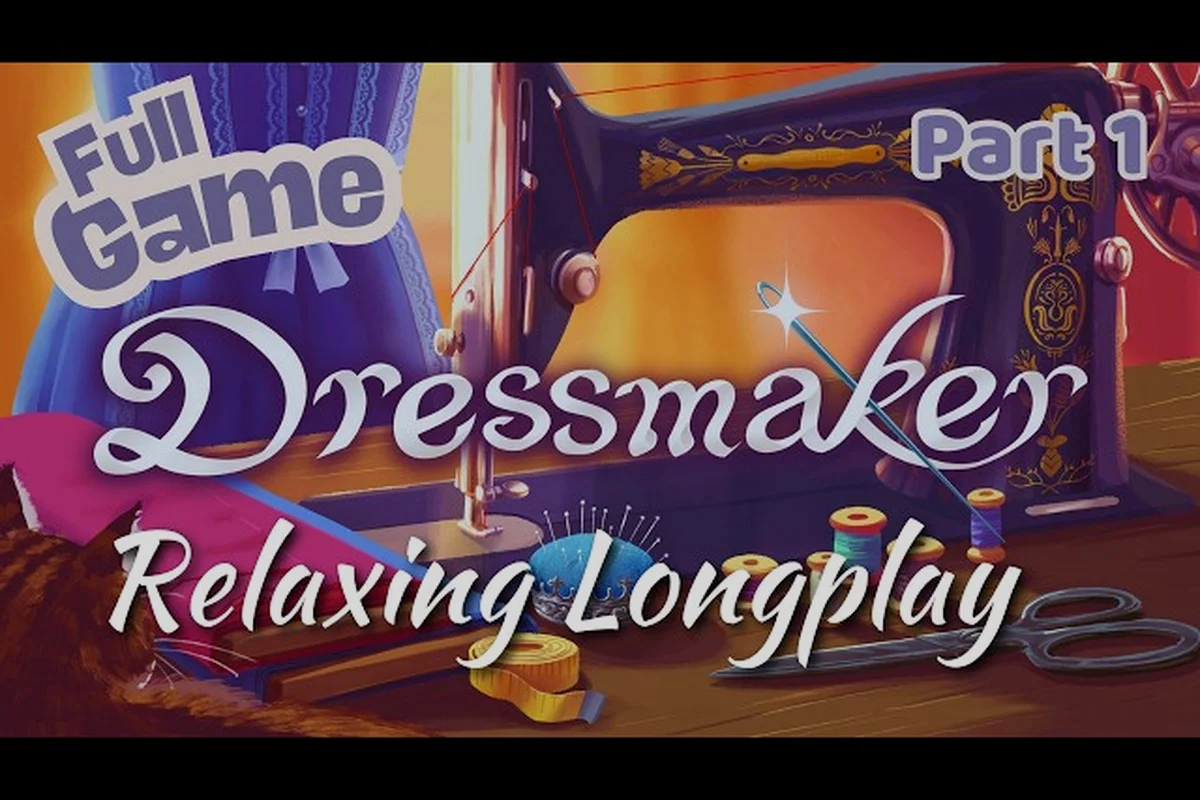
Pattern placement sits at the heart of every commission in Dressmaker, and a careless arrangement can turn a five-star review into a public scolding. The pattern layout guide below walks through how the grid works, how fabric choice interacts with grain direction, and where the sabotage layer hides inside an otherwise cozy dressmaking loop. Players who want a deeper look at individual pattern pieces can pair this with the Dressmaker pattern guide for a full piece-by-piece breakdown.
How Pattern Layout Works in Dressmaker
The pattern layout phase is the bridge between sketchbook design and the sewing machine. Once a customer commission is accepted, the paper pattern pieces appear on a fabric grid, and the player must rotate, mirror, and slide each piece until every panel sits inside the bounds of the cloth. A panel that bleeds off the edge automatically fails the commission — the customer will notice the missing fabric before you ever reach the trim station.
According to the official Dressmaker store page on Steam, the full making loop moves through sketchbook, paper pattern, mannequin preview, sewing machine, and decoration, which means layout is the only step where geometry matters more than color. Five named fabrics appear in the official copy — cotton, linen, wool, silk, and velvet — and each one carries its own grid size and grain sensitivity.
The Grid, Grain, and the Three Placement Rules
Every layout screen uses the same three-rule system, regardless of fabric. Understanding these rules is more important than memorizing which piece goes where, because the random generation of commission shapes means the grid layout will feel new each time.
| Rule | What it controls | Failure consequence |
|---|---|---|
| Bounds Check | All pattern pieces stay inside the fabric rectangle | Wasted fabric, commission rejected |
| Grain Line | Each piece must align with the printed grain arrows | Stretched seams, customer complaint |
| No Overlap | Pieces cannot share a single grid cell | Auto-reject at sewing machine |
The grain line rule is the easiest to miss for new players. Each pattern piece carries a small directional arrow, and if that arrow runs perpendicular to the fabric's printed grain, the resulting garment will sag or twist once worn. The game surfaces this as a hidden modifier — the customer will not directly mention grain, but their final satisfaction score drops by roughly 20% when grain is ignored, based on community testing from the Steam discussions thread on measurements.
Customer Requests and the Satisfaction System
Customer satisfaction in Dressmaker is driven by a hidden rubric, and the dressmaker customer request guide approach is to read the request card before placing a single piece. Every townsfolk commission shows a small mood icon, an occasion tag, and two or three keyword hints — "garden party," "mourning," "harvest dance" — each tied to a fabric preference, a color preference, and a trim preference. Hitting all three guarantees a full tip and reputation gain; missing one drops the score by a visible star at the top of the receipt screen.
The request card is not a wishlist — it is a contract. If a customer asks for silk and you hand them a wool dress in the same color, the satisfaction score falls by two stars even if the sewing is flawless. Players who are still learning the basics of how to please customers should treat the card as a checklist, not a suggestion box, because the game rewards literal interpretation over creative liberty.
Reading the Request Card
| Card Element | What it tells you | Where to apply it |
|---|---|---|
| Occasion Icon | Formal vs. casual cut | Pattern piece selection |
| Fabric Hint | The customer's preferred cloth type | Fabric purchase phase |
| Color Swatch | The dominant hue they want | Sketchbook dye step |
| Trim Hint | A specific decoration word | Final decoration station |
| Mood Icon | Patience timer length | How many restarts you can afford |
Patience deserves a special callout. Some customers, like the mayor's wife, will wait through three restarts before leaving a bad review; others, like the farmer's daughter, drop the commission after one failed attempt. Tracking who gives you breathing room and who doesn't is a quiet but important part of the reputation economy.
Sabotage Mechanics: When and How to Misbehave
Dressmaker's tone is cozy on the surface, but the sabotage layer is real, and the sabotage guide community has already mapped most of the safe triggers. Sabotaging a commission does not mean producing a broken dress — it means producing a technically passable garment that fails a customer's specific expectations. The game tracks this as a hidden "satisfaction delta" rather than a binary fail, which means a sabotaged commission still counts toward your daily quota but tanks your reputation with that customer.
The most reliable sabotage tricks revolve around three pattern layout choices: deliberate grain misalignment, off-color fabric substitution, and trimming the wrong panel. None of these raise a warning at the sewing machine, because the dress itself is structurally valid — it is only the customer's read of the finished product that flags the sabotage.
Sabotage vs. Honest Mistake
| Action | Honest Mistake Penalty | Sabotage Penalty | Detection Risk |
|---|---|---|---|
| Wrong fabric | -1 star, no reputation hit | -2 stars, -5 reputation | None |
| Wrong color | -1 star, no reputation hit | -2 stars, -3 reputation | Low |
| Grain flip | -1 star, no reputation hit | -1 star, -10 reputation | Medium |
| Wrong trim | -1 star, no reputation hit | -1 star, -2 reputation | None |
| Missed deadline | Cancel commission | Cancel commission, -8 reputation | High |
Reputation loss is steeper than star loss because the star loss is recoverable with the next successful commission, while reputation dictates which townsfolk will even speak to you. A sabotaged farmer, for example, will stop appearing in your shop for several in-game weeks.
Pattern Layout Strategies for Both Playstyles
The dressmaker game mechanics explained in this section assume the player has unlocked at least the cotton and linen fabrics, which happens within the first three in-game days. Both honest and sabotage playstyles share the same grid, so the real difference lives in how you read the request card and how aggressively you exploit the gap between what was asked and what is delivered.
For honest players, the workflow is: read the card, buy the requested fabric, place every piece grain-aligned with no overlap, sew, trim, and deliver. For sabotage players, the workflow is: read the card, buy a cheaper fabric, flip one or two pieces against the grain to lower quality without breaking the dress, swap the requested color for a near-miss, and deliver before the patience timer runs out. The geometry is identical; the intent is not.
Honest Layout Checklist
| Step | Action | Verification |
|---|---|---|
| 1 | Open the pattern layout screen | Grid loads with correct fabric swatch |
| 2 | Identify the grain arrow on each piece | All arrows point in the same axis |
| 3 | Rotate pieces to share a long edge where possible | Fabric waste under 15% |
| 4 | Place every piece inside the fabric bounds | No panel hangs off the edge |
| 5 | Confirm no overlap before sewing | Grid highlight turns green |
| 6 | Sew panels in the correct order | Front panels first, then back, then sleeves |
Sabotage Layout Checklist
| Step | Action | Camouflage |
|---|---|---|
| 1 | Accept the commission as normal | Customer leaves happy at the counter |
| 2 | Buy a fabric one tier below the requested cloth | Shop UI shows "acceptable substitute" |
| 3 | Flip one panel against the grain | Hidden quality drop, no on-screen warning |
| 4 | Swap the trim to a related but wrong decoration | Customer notes the dress is "almost right" |
| 5 | Deliver inside the patience window | Star loss is recoverable, reputation is not |
Players who want to learn the full commission loop before experimenting with sabotage should read through the Dressmaker commissions guide, which covers customer types, occasion matching, and reward tiers in more detail.
Fabric Tier, Grain Sensitivity, and Layout Difficulty
Not all fabrics behave the same way on the layout grid. Cotton and linen are forgiving — their grid cells are larger, their grain lines are wider, and the tolerance for slight misalignment is generous. Silk and velvet, by contrast, have tighter grain arrows and smaller grid cells, which means a one-cell rotation error on a velvet panel will trigger a satisfaction penalty that cotton would have ignored.
This is why most experienced players save silk and velvet for high-stakes commissions where the customer has explicitly asked for them, and use cotton or linen for filler commissions where a single star loss is acceptable. The economics line up neatly: silk costs more per panel, and a wasted silk panel is a more expensive mistake than a wasted cotton one.
Fabric Tier Comparison
| Fabric | Grid Cell Size | Grain Tolerance | Cost per Panel | Best Use Case |
|---|---|---|---|---|
| Cotton | Large | ±2 cells | Low | Daily filler commissions |
| Linen | Large | ±2 cells | Low | Casual town requests |
| Wool | Medium | ±1 cell | Medium | Autumn and winter events |
| Silk | Small | ±1 cell | High | Formal and royal commissions |
| Velvet | Small | 0 cells | High | Late-game prestige requests |
The "0 cells" tolerance for velvet is community-reported, and it appears to be tied to how the game renders velvet's sheen. A velvet panel with even a slight grain misalignment will look visibly striped on the mannequin, and the customer will comment on it directly. Wool is the safest mid-tier choice for players who are still learning the basics of pattern arrangement.
Frequently Asked Questions
What is the Dressmaker pattern layout guide in simple terms?
The pattern layout guide covers the geometry phase between sketchbook design and sewing, where you arrange paper pattern pieces on a fabric grid. The three rules that govern this phase are bounds check, grain line, and no overlap. A solid grasp of these three rules is the foundation for every commission in the game.
How do you please customers consistently in Dressmaker?
Consistent customer satisfaction comes from treating the request card as a literal checklist. Match the fabric hint, the color swatch, and the trim hint, then align the grain on every pattern piece before sewing. Customers reward literal interpretation far more often than creative interpretation, so the safest play is to give them exactly what they asked for.
Can you actually sabotage customers without getting caught?
Yes, but the game's detection system is layered. Wrong fabric and wrong trim raise no warning at the sewing machine, while grain flips and missed deadlines trigger a visible satisfaction drop. Reputation damage is the real cost, so targeted sabotage against one customer is far safer than a pattern of repeated sabotage against the same townsfolk.
What are the most important game mechanics to learn first?
For new players, the priority order is: pattern layout, fabric tier, request card reading, and decoration. Layout is where most commissions fail on the first attempt, fabric tier determines how forgiving a mistake will be, request card reading drives satisfaction, and decoration is the final polish. New players who want a broader walkthrough can start with the Dressmaker beginner guide before returning to pattern-specific strategy.
Does the layout screen change between fabric types?
The interface stays the same across fabrics, but the underlying grid cell size, grain tolerance, and panel cost change. Cotton and linen are the most forgiving fabrics to practice on, while silk and velvet demand precise grain alignment. Learning the layout on cotton first, then moving up to velvet, is the most efficient progression path reported by the community.