
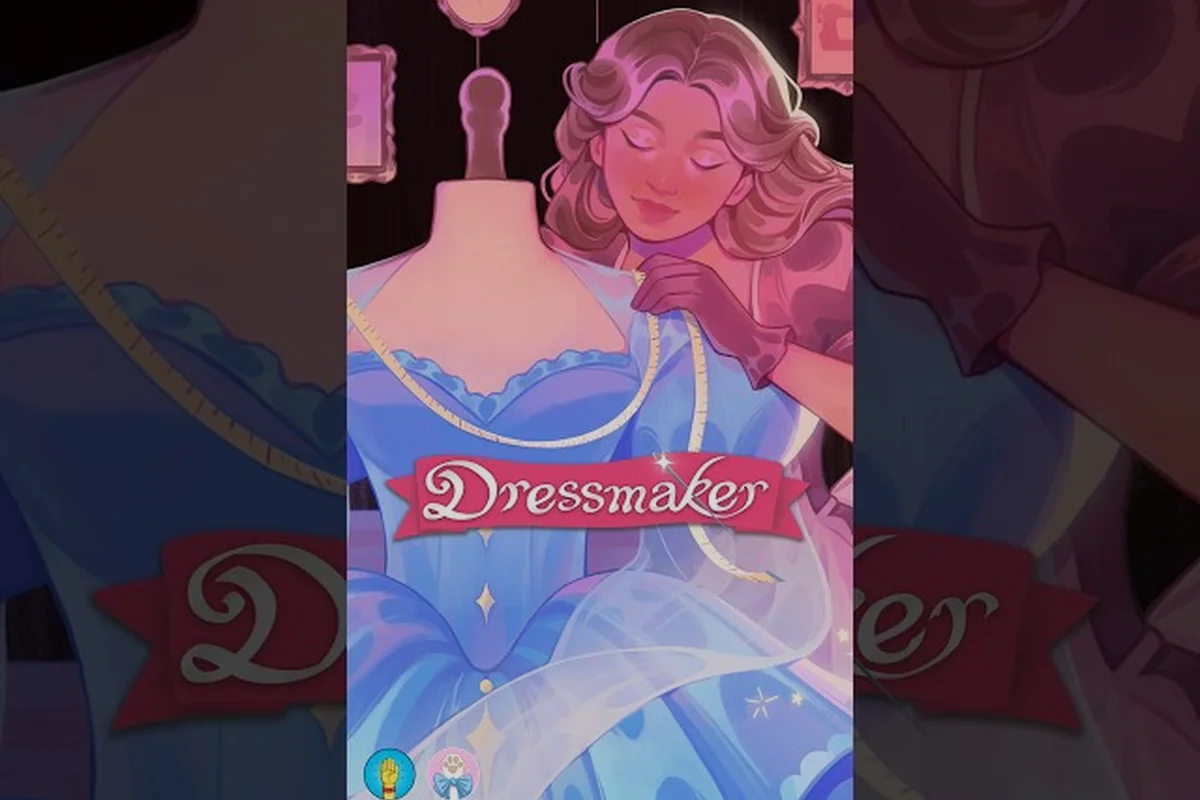
Dressmaker drops players into a sunlit small town where every face on the street can become a commission, a story beat, or a soft-furred distraction. Knowing the town map characters, their daily hangouts, and which creatures accept a pat on the head turns wandering into a productive workday. The press kit confirms the social world revolves around townsfolk, fabric, and a cat you can absolutely pet.
Reading the Town Map and Its Cast
The town in Dressmaker reads like a hand-stitched postcard. A central square links the boutique, a fabric shop, a café, and a small park, with footpaths fanning out to a beach, a chapel, and a few residential lanes. The character backstories that arrive through commissions are tied to these zones — each neighbor has a place they treat as home base, and their walking patterns shift with weather and time of day.
| District | Visual Mood | Frequent Visitors | Commission Hook |
|---|---|---|---|
| Town Square | Bright cobblestones, fountain | Edith, café regulars | First-week introductions |
| Boutique Row | Patterned awnings, fabric bolts | Traveling customers, agents | Material trade-ins |
| Park & Pond | Willow shade, ducks | Elderly strollers, picnickers | Casual social invites |
| Chapel Lane | Quiet stonework, climbing roses | Wedding parties, mourners | Ceremonial garments |
| Beach Path | Sea breeze, driftwood | Weekend walkers, fishers | Casual summer commissions |
Walking the square at opening hour gives the cleanest read on who is in town. The map is small enough that a full circuit takes roughly three real-time minutes, which means the dressmaker town map characters rotate through your field of view often enough to learn their schedules without consulting a checklist.
Edith appears in the square from the very first day and tends to stay there between mid-morning and late afternoon. She is the early-game anchor for almost every newcomer's roster, so a good first stop after unlocking the boutique is to scan the fountain for her teal cardigan.
The boutique sits on the south edge of the square and shares a wall with the fabric shop. The cat, as the community calls it, is a permanent fixture inside the boutique, which is why new players often meet the cat before they meet half the town. According to the Dressmaker press kit, the "CAN PET THE CAT: Yes" line is the only fact-sheet field dedicated to a non-human, which tells you how central that little creature is to the cozy identity.
Meet Edith, the First Friendly Face
Edith is the customer most newcomers meet on day one, and she functions as both tutorial and warm welcome. She is described in early community reports as a warm, slightly nervous woman who lingers near the fountain because she likes the sound of water while she waits to be fitted.
| Trait | Detail | Why It Matters |
|---|---|---|
| First appearance | Day 1, Town Square fountain | Reliable tutorial anchor |
| Style preference | Soft florals, breathable cottons | Easy first commission |
| Personality | Anxious but curious | Opens up through repeat visits |
| Schedule | Mid-morning to late afternoon | Plan fittings around her walks |
| Role in story | Bridges player to other townsfolk | Unlocks new map characters |
A practical rhythm works well: open the boutique, restock, then check the square for Edith. If she is there, her first commission is usually something gentle — a sun dress or a simple blouse — which means you can focus on learning the cutting and sewing tools instead of chasing rare fabric. Her style notes are forgiving, and finishing her request on day one or two is one of the softest early wins.
Dressmaker character backstories, including Edith's, are revealed in layers. She opens with small talk about her garden, then mentions a missing button, then a relative's birthday, and then a quiet confession about wanting a dress she has never had the nerve to order. That staircase of trust is the same shape used for the other town map characters, so once you understand Edith's pacing, the rest of the cast follows the same rhythm.
If you are looking for a deeper dive into the cast roster beyond Edith, the characters list overview breaks down each neighbor's preferences and pacing. The short version is that Edith is the entry point and every other character builds on the rapport model she introduces.
Why Edith Is a Useful Early Client
Edith's commissions reward correct grain alignment more than exotic fabric selection, so a clean cotton or linen produces a passing grade. Her taste profile also functions as a teaching tool: the difference between grain-aligned and bias-cut seams is most visible on the kind of flowing, breathable pieces she requests. Practicing on her orders is the cheapest way to internalize the cutting mini-game before tougher clients arrive.
When Edith finally asks for something more personal — a soft, formal dress for a family event — the game signals that your reputation has grown enough to handle the witch, the vampire, and the otherworldly townsfolk who will start requesting commissions later. Treat her final arc as both a story beat and a credential.
The Cat, the Boutique, and Every Pettable Animal
The cat is the most consistent animal in the world, and the easiest one to find. The shop cat guide spread across early player posts comes down to a single fact: walk into your boutique, walk to the cutting table, and the cat is usually sitting on the sunniest patch of floor nearby. Approaching with no tool equipped and pressing the interact key will trigger a short petting animation and a small line of approval dialogue.
| Animal | Where to Find | Time Active | Pet Bonus |
|---|---|---|---|
| Shop cat | Boutique, near the cutting table | All hours | Calm focus buff, soft purr |
| Park duck | Pond edge, west of the fountain | Morning to dusk | Ambient sound, no buff |
| Square pigeon | Cobblestones near the café | All hours | Visual ambience, startled flutter |
| Beach dog | Sand path, near the chapel lane end | Late morning to evening | Loyalty side quest hook |
| Stray tabby | Chapel lane garden wall | Dusk | Hidden heart-emote trigger |
Each pettable animal has a different feedback loop. The shop cat grants a brief calm focus effect that makes the sewing mini-game marginally easier for the next garment, which makes mid-afternoon petting breaks genuinely useful rather than pure flavor. The beach dog opens a side questline if petted repeatedly over several in-game days, while the stray tabby in chapel lane triggers a heart emote from passers-by and gives the boutique a small reputation bump.
The pettable animals list is not enormous, but each creature is hand-placed in a way that rewards slow exploration. Players who sprint past the pond miss the duck; players who ignore the chapel lane never see the stray tabby that reacts to dusk. The community calls this design "quiet motivation" — there is no checklist, just a world that rewards attention.
A useful habit is to keep a mental loop: leave the boutique, walk the square counterclockwise, and pause at the pond and the chapel lane before returning. Over the course of a single in-game week this loop introduces the cat, the duck, the pigeon, the beach dog, and the dusk tabby without any explicit objectives.
Reading Animal Schedules Without a Journal
Animal schedules are looser than human schedules, but the shop cat is the most reliable because the boutique is your home base. The pond duck and the beach dog rotate with the weather — rain keeps the duck on the sheltered side of the reeds, and overcast mornings tend to send the dog toward the chapel wall rather than the sand. The pigeon is essentially omnipresent and mostly serves as a quick ambient reward.
If you want to verify the pet list, the Steam achievements guide tracks the cat as an early interaction milestone and confirms that petting the shop cat is treated as a featured moment rather than a hidden extra. That makes the cat the highest-value creature per second spent, simply because it sits three steps from the cutting table.
Day-by-Day Routine for Meeting the Whole Town
Town map characters do not all show up on day one. Most arrive through a soft rollout over the first two in-game weeks, gated partly by your reputation and partly by story progression. A predictable routine is the easiest way to make sure you do not miss anyone during the soft launch.
| Day Range | Square Anchors | Side Locations | Commission Style |
|---|---|---|---|
| Day 1–3 | Edith, café regulars | Park bench readers | Simple cotton pieces |
| Day 4–6 | Wedding planner | Chapel lane arrivals | Ceremony garments |
| Day 7–9 | Traveler, beach dog walker | Beach path | Casual summer pieces |
| Day 10+ | Witch, vampire, otherworldly | Dusk chapel, foggy beach | Dramatic, themed designs |
The square in the early days acts as a soft tutorial zone. Edith anchors the fountain, the café owner anchors the patio, and a small cluster of regulars cycles through the bench seats. By day four the wedding planner appears near the chapel, which doubles as your introduction to formal commissions and to the chapel's role as a social hub for evening events.
Around the one-week mark, the map begins to feel alive. Travelers stop in for one-off commissions, the beach dog walker becomes a recurring presence, and the first hints of the supernatural townsfolk appear as silhouettes in the fog. The game does not announce these arrivals with a quest marker — the soft signal is a new face standing where nobody stood yesterday.
Reputation is the silent gate. Each finished commission adds a small amount of social capital, and once you cross the day-ten threshold the witch, the vampire, and the haunted figure at the chapel begin to drop by. Community reports describe this rollout as gentle and non-punishing, but it is real, so prioritizing Edith's storyline in week one is the fastest way to unlock the rest of the cast.
A Sample Walking Route
A practical day looks like this: open the boutique, pet the cat, check the fabric shop for restocks, return to the cutting table, complete one or two commissions, then walk the square. The first loop usually catches Edith or the café regulars. A second loop after lunch catches the wedding planner near the chapel and the beach dog walker on the sand.
By day seven, that same route begins to include the traveler and a new face on the fountain edge. The route itself does not change; the cast moving through it does. Treat the walking circuit as a conversation with the town and the map will keep paying you back in new commissions, new stories, and a steadily growing list of pettable animals.
Building Relationships Beyond the First Commission
The character backstories in Dressmaker are delivered the way a good tailor takes measurements — slowly, with attention to detail, and only after a little small talk. Each townsfolk has three to five trust tiers, and each tier unlocks a new slice of personal story plus access to more demanding commissions.
| Trust Tier | Social Signal | Commission Difficulty | Story Reveal |
|---|---|---|---|
| 1 — Stranger | Polite nod | Simple cotton pieces | Name and family role |
| 2 — Acquaintance | Casual chat | Patterned or layered | Daily life, hobby |
| 3 — Friend | Invites you somewhere | Formal or themed garments | Family history, dreams |
| 4 — Confidant | Asks your advice | Signature pieces | Past regret or secret |
| 5 — Devoted | Sends others to you | Final arc garment | Full backstory |
Hitting tier three with three or four neighbors is the realistic mid-game goal, and tier four is the soft cap before the final arc. Each tier raises the price you can charge, the fabric you can request, and the kinds of patterns the customer will accept. Pushing for tier five on more than two characters in a single playthrough is slow work, but the system rewards depth over breadth.
The boutique itself becomes a character through these relationships. Once a few townsfolk reach tier three, they start to hang around the shop during their off-hours, which makes the boutique feel less like a workplace and more like a living room. The cat, predictably, is usually the first thing they greet.
Players who want a sharper look at what each character unlocks at higher trust levels can pair this guide with the character gift and commission overview, which translates the relationship system into fabric choices and gift preferences. The two reads together cover both the social layer and the crafting layer.
Why the Backstories Are Worth Reading
The character backstories are not flavor text, and the game never frames them that way. The witch's request, for example, makes more sense once you know what she lost before moving to town; the vampire's cool palette preference ties back to a reason you only learn at tier three. Each story beat informs the commission you are sewing, which means reading carefully is rewarded with cleaner design choices.
Players who read the backstories also tend to design more thoughtful garments, and thoughtful garments tend to score better. The two systems lean on each other, and that is part of why the social simulation feels less like a minigame and more like actual life in a small town.
Atmosphere, the Town Square, and Why the Map Matters
The town in Dressmaker is small, and that is the point. Every district is reachable on foot, every building has a recognizable face or a pettable animal, and the map never outgrows the time you have in a single play session. The boutique is a two-minute walk from the beach, the chapel is a three-minute walk from the square, and the cat is always three steps from the cutting table.
A useful mental model is to treat the town as a small neighborhood rather than a sprawling city. The square is the living room, the boutique is your workshop, the park and pond are the backyard, the chapel is the meeting hall, and the beach is the weekend escape. Town map characters rotate through these rooms the way neighbors drop by, and the boutique is where most of the meaningful conversations happen.
Atmosphere also does real work. Rain keeps a few customers indoors, dusk brings out the stray tabby, and sunny mornings draw Edith to the fountain. The map rewards players who walk slowly and notice details, and it gently punishes players who sprint through the square on the way to the next commission. The cat is a soft ambassador for that design philosophy — it has no quest attached, and yet every player remembers where it sits.
Once the routine is internalized, the town becomes a small social world you can navigate with your eyes closed. Edith by the fountain, the cat by the cutting table, the duck by the pond, the beach dog on the sand, and the witch somewhere in the fog at dusk. That mental map is the entire dressmaker town map characters experience in one breath.
Frequently Asked Questions
Who is Edith in Dressmaker?
Edith is the first recurring customer you meet at the fountain in the town square, recognizable by her teal cardigan. She anchors the early-game tutorial, opens with simple cotton commissions, and slowly introduces the relationship system used by the rest of the cast.
Where do I find the shop cat?
The shop cat sits in your boutique, usually near the cutting table or on a sunny floor patch by the window. Walk in with no tool equipped and interact to trigger a petting animation, a brief calm focus buff, and a short line of approval dialogue.
Are there other pettable animals besides the cat?
Yes. The park pond has a duck, the square has a pigeon, the beach path has a dog, and chapel lane hides a stray tabby that only appears at dusk. Each one is hand-placed and reacts to time of day and weather.
How do I unlock the supernatural town map characters?
The witch, the vampire, and the haunted figure appear after roughly ten in-game days, gated by your reputation and by completing Edith's early storyline. Finishing her commission arc and reaching trust tier three with a few neighbors is the fastest path.
Do the town map characters move around during the day?
Yes, but their patterns are predictable. Edith favors the fountain between mid-morning and late afternoon, the wedding planner circles the chapel, and the beach dog walker shows up on the sand in late morning. A counterclockwise loop of the square once or twice per day catches most of the cast.